

pHRism is a UK consultancy that selects, implements and runs HR and payroll systems for its clients, including private equity firms. Across its programmes, two requirements recurred often enough to warrant a permanent capability.
Both were build problems rather than advisory ones. This is how the two of us built them.
Two requirements that kept coming back
Self-hosted AI dashboards
pHRism already delivered Power BI and Tableau as part of its HR systems practice. Each programme brought requests for dashboards built to the client's own operating model, and increasingly for a conversational layer: a question asked in plain English, answered from the data. Each request was a bespoke build, and they had become a standard feature of every engagement.
Payroll reconciliation
Every HR systems practice meets it. Payroll files arrive from several vendors, in different formats and on different dates, and are matched to the ledger by hand. Errors surface after the month has closed, the audit trail sits in email, and the cycle repeats on the seventeenth of the following month.
The partner
Indian Insights Company is an India-based analytics startup. Its founder spent fifteen years across engineering, consulting and B2B sales, latterly leading revenue growth teams at PepsiCo and General Mills from their global capability centres in India, building dashboards adapted to how each business ran and re-engineering the reporting processes behind them. The team builds with AI in the loop, and every deliverable is reviewed by a person before release.
From conversation to live screen, with changes on demand
The client conversation is the specification. There is no separate requirements document, and every step that follows is built from that record.
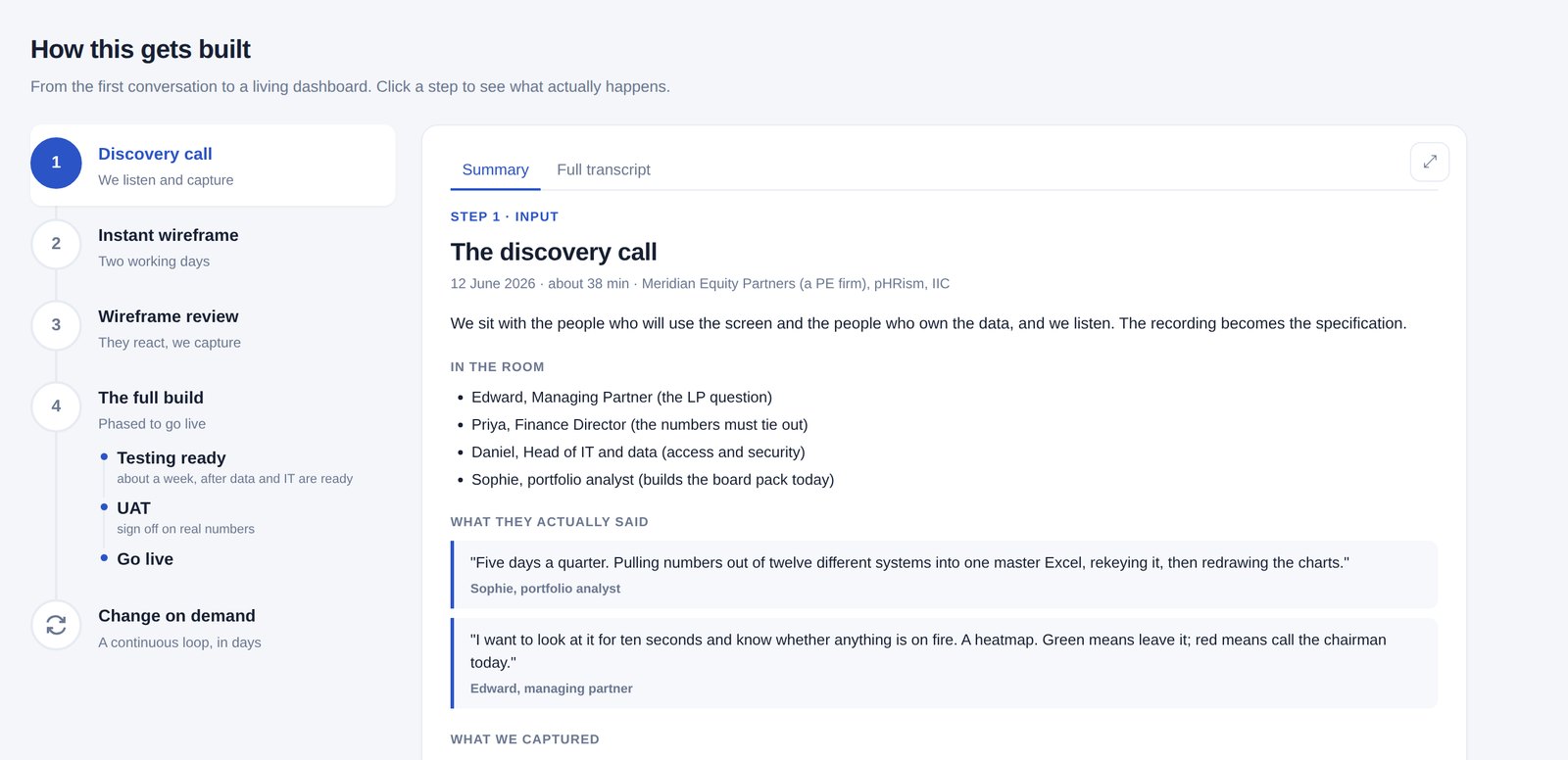
A self-hosted platform, at AI-native speed and economics
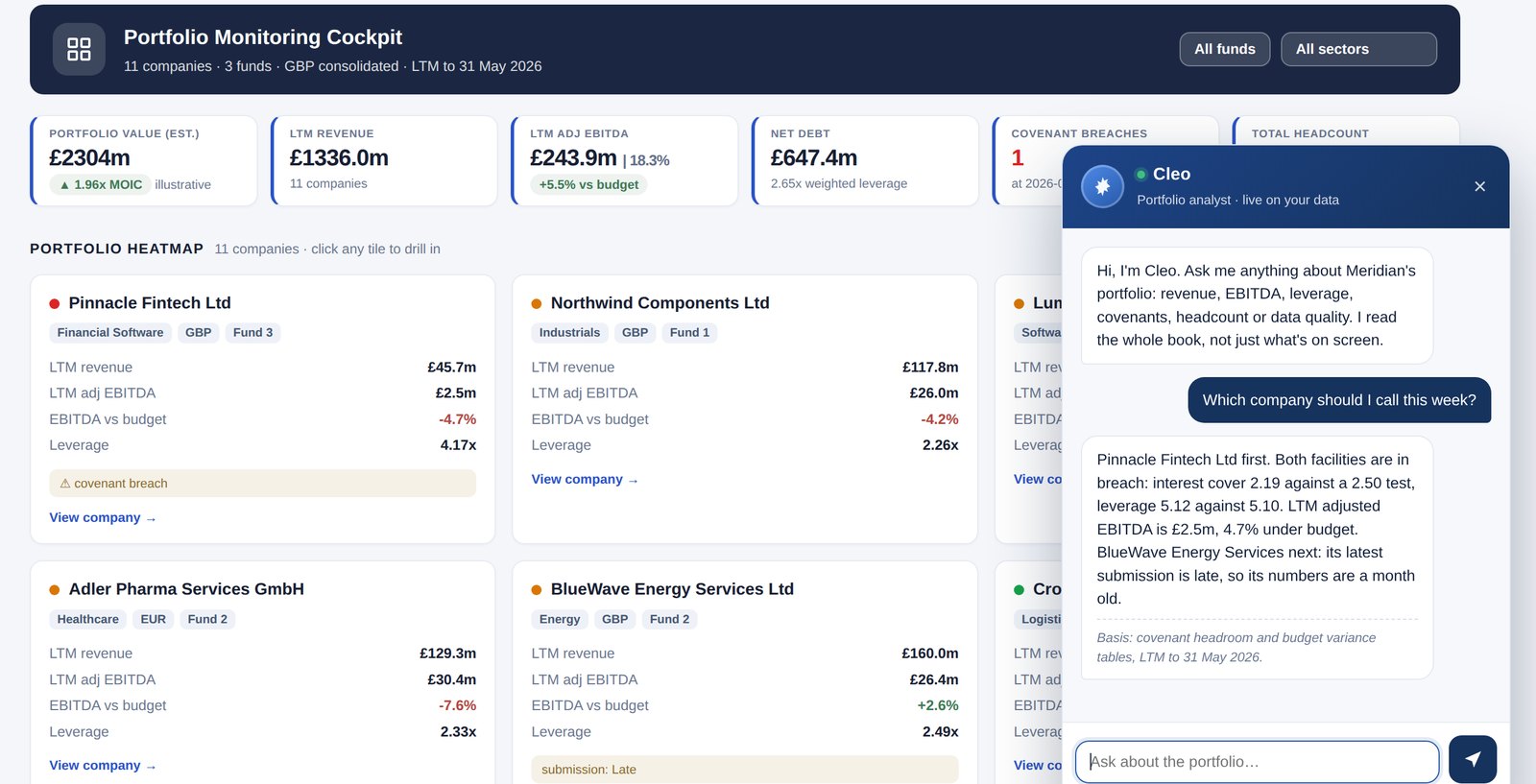
Change management precedes the first wireframe. The team settles who opens the screen each morning, which review it belongs to, the few numbers each role needs, the definition of each, and who decides on change requests. The build is fast because this thinking is done first, and the screen stays in use for the same reason.
Payroll reconciliation, three sources into one
Payroll reconciliation is a manual problem more than a complex one. The data comes from three places, and the work between them has always fallen to people, after the month has closed.
Contracts
From the HR system: who is employed, on what terms, in which country.
Payroll accounting data
The payroll vendors' files and the accounting entries behind them.
Reconciliation on the ERP
The two are matched to each other and to the ledger, and the differences explained.
Two additions to pHRism's offer
pHRism already had depth in HR and payroll systems, with Power BI and Tableau delivery on top. The partnership adds two capabilities: dashboards built and changed at AI speed, with an assistant that answers on governed numbers, and an AI reconciliation layer for payroll. Both sit within pHRism's practice, delivered under its name and built with Indian Insights Company.
Working with Indian Insights Company has felt far more like building a partnership than engaging a typical vendor. Their team brings exceptional care and precision to our data and to our wider business needs, and has earned our trust at every stage. Indian Insights is now an inseparable extended team for us, delivering to our exact requirements and vision, and more.
What sets them apart is how they bring analytics, strategy and AI together under one roof, so nothing is overlooked and every opportunity is taken. The value they have delivered, at the pace they have delivered it, speaks for itself.
They are exactly the kind of team I would confidently recommend to any organisation looking for a reliable, forward-thinking partner.

A UK consultancy that selects, implements and runs HR and payroll systems, and delivers the dashboards and AI that sit on them. Clients include private equity firms.
An India-based, AI-native data analytics startup. Dashboards, decision models and AI agents for groups in India and the UK.